Tuesday, February 14, 2012
Fast Food Nations Chapter 2 questions
I think that the targeting of children outside of school for the fast food industry is a pretty smart move. I mean this is business after all. The responsibility falls on the parents to teach their children whether they are being persuaded in to something anyway. On the other hand, I believe that the use of schools to advertise is a shady move on the fast food industry's point of view. It really disturbs me when children can no longer walk down a hallway without seeing an advertisement for a Big Mac or drink Coca-cola is something that needs to be change for the best of the kids and the nation. I think the main difference between an ethical use of advertisement and an unethical one is whether the advertisement can be chosen to be shut down rather than putting so many McDonald advertisements around that you have to go buy a Big Mac . The debate is that children don't know what is good for them, they only know whats on TV for the kids which is a bunch of Fast Food advertisements, And some parents have no choice to buy fast food because they can't afford anything else.

Fast Food Nations Chapter 3 questions
Fast food workers have not unionized because of the history that shows how much effort is put into it . Some efforts have been successful bug many workers don’t even bother to try anymore. Sometimes when a manager suspects efforts to unionize he informs a person higher up in the corporate ladder than him, then actions are taken immediately. A squad of managers and corporate executives are sent in and meetings are put in place where questions alot of questions are ask to the workers. harsher and bother some policies are put in place sometimes even resulting in a lot of lie detector tests. All workers don’t unionize because they know that such actions will get them to be fired from their job.
Thursday, February 9, 2012
Fast Food Nations Question 4
1. For fast food franchises across the United States, the fast food chains are periodically sued by franchisees who are upset about encroachment, and inflated prices charged by suppliers. This is in page 100 paragraph two and the evidence shows that fast food restaurants have a lot of trouble in legal issues.
2.Subway has been involved in many unusual legal actions. For example, instead of recruiting franchisees the way most fast food restaurants do, Subways relies on "development agents". Because the agents are really considered independent contractors and their salary is dependent on how many Subways are open in their area. And compensations their work, is them receiving some of the money that is paid in the subway franchisees, and annual royalties. But when agents fail to meet their monthly quotas they are forced to pay the company for the money they owe. This puts pressure on the agents to open new subway restaurants, even if they are not close to each other in the agents area. Subway often makes new franchises, work 50 to 60 hours to earn enough money to get by.
2.Subway has been involved in many unusual legal actions. For example, instead of recruiting franchisees the way most fast food restaurants do, Subways relies on "development agents". Because the agents are really considered independent contractors and their salary is dependent on how many Subways are open in their area. And compensations their work, is them receiving some of the money that is paid in the subway franchisees, and annual royalties. But when agents fail to meet their monthly quotas they are forced to pay the company for the money they owe. This puts pressure on the agents to open new subway restaurants, even if they are not close to each other in the agents area. Subway often makes new franchises, work 50 to 60 hours to earn enough money to get by.
Thursday, January 12, 2012
Fast Food Nations intro and chapter 1 questions
Intro: How is the 'American world view' embodied in the fast food industry?
When the other nations of the world see that our obesity rates are up and the amount of unhealthy people are going because there is a lot of fasts in the united states. That puts a big view of the American world.
Chapter 1: What elements of Southern California "culture" contributed to and encouraged the development of fast food restaurants?
he saw the way industrtys for automobiles can help how he runs his fastfood restraunt and develop it more
When the other nations of the world see that our obesity rates are up and the amount of unhealthy people are going because there is a lot of fasts in the united states. That puts a big view of the American world.
Chapter 1: What elements of Southern California "culture" contributed to and encouraged the development of fast food restaurants?
he saw the way industrtys for automobiles can help how he runs his fastfood restraunt and develop it more
Tuesday, November 29, 2011
Source 1
http://animalrights.about.com/od/animallaw/a/AnimalsProperty.htm
This article was about why animals shouldn't be considered property. And what they should be viewed as. This helps our argument because it shows a clear reason why animals should be more than just property and it can lead into animals getting rights.
This article was about why animals shouldn't be considered property. And what they should be viewed as. This helps our argument because it shows a clear reason why animals should be more than just property and it can lead into animals getting rights.
Source 2
http://www.avma.org/onlnews/javma/may03/030515n.aspThis source had two articles in it
The article I'm going to talk about is the article about how dogs can be dangerous too. And how to dogs tend to bite people. This could help because these are the type of source that can counter our argument big time about animal rights.
The article I'm going to talk about is the article about how dogs can be dangerous too. And how to dogs tend to bite people. This could help because these are the type of source that can counter our argument big time about animal rights.
Source 5
http://www.videolinks4u.net/video/videos/205850/
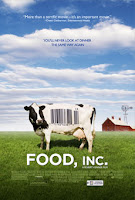
Food Incorporated Documentary
This documentary was talking about how a lot of fast food corporation were going against health codes. And keeping the public in the dark about what goes on in their factories. This can tie into our argument because most of these corporations miss treat the animals, some animals in the fast food factories don't even see the sunlight. This is one example of how animals need rights too.
Food Incorporated Documentary
This documentary was talking about how a lot of fast food corporation were going against health codes. And keeping the public in the dark about what goes on in their factories. This can tie into our argument because most of these corporations miss treat the animals, some animals in the fast food factories don't even see the sunlight. This is one example of how animals need rights too.
Source 3
http://articles.cnn.com/keyword/animal-rights
Germany votes for animal rights
This source can help our argument, because Germany showed a major step in animal rights. Because Germany is the first country to put animal rights in their Constitution. Which limited a lot of animal experiments in Germany.
Germany votes for animal rights
This source can help our argument, because Germany showed a major step in animal rights. Because Germany is the first country to put animal rights in their Constitution. Which limited a lot of animal experiments in Germany.
Tuesday, November 22, 2011
Extra Credit Food incorporated 11/22/2011
Central Argument:
The industries doesn't want you to know what your eating . The people have the right to know where and what is the food coming from that they are eating from fast foods and grocery stores.
Assertion 1: The food companies don't want the farmers talking about what goes on behind the scenes to the public, because if the public knew the truth they might not want to eat their food.
Assertion 2: The whole industrial food system began with fast food.
Assertion 3: The in industries changed the entire way chickens,cows, and pigs are raised.
Assertion 4: After the decline of tobacco farmers went to chicken farming.
Assertion 5: The companies keep the farmers under their thumb because of the debt the farmers have to them, and their contract.
Assertion 6: A typical grower who have chicken houses barrows over 500,000 dollars. And earns about 18,000 dollars a year.
Assertion 7: There is a illusion of diversity of where your food comes from in grocery stores and fast food restraints.
Assertion 8: The government pays the corn farmers and other food farmers to over produce.
Assertion 9: Corn is the main component in food ingredients. And also corn is being used to feed the animals in food factories.
Assertion 10: The food factory farming is so caught of with technology and how its improving the economic growth. They will continue to treat animals with disrespect and used to make different products of foods.
Assertion 11: As soon as when you want your farming industries to grow your going to view the things that are important to you like costumers, workers, and animals differently.
Opinion topic: The food incorporation are keeping the public in the dark about where their food is coming from, and what they are doing to them. They are also keeping the public in the dark about how they are treating the animals and what they would do to make economic growth. The public as the right to this behind the scenes information for the fast food companies and all the food companies. Because the public eats and buys their product.
Sunday, November 13, 2011
Sunday, November 13, 2011 Homework
A New Book Argues Against the SAT
http://thechoice.blogs.nytimes.com/2011/11/09/sat/?scp=2&sq=argument%20essay&st=cse

Summary:Wake Forest University announced three years ago that it would make SAT opional for undergraduate applicants. Joseph Soares, a sociology professor at the university supports the choice because he believes standarize testing is bias to minorities and women.
Central Argument: The central argument is that the SAT and ACT are fundamentally discriminatory.
Assertion #1: One assertion in this eassy is when Mr. Soares saids in the story “High school grades are the single most powerful predictor of college performance,” he said. “High SAT scores over-predict how well a student is going to do in college, and they’re inversely related to academic engagement.” Which he is stating that colleges should look at high school students grades instead of maily looking at their SAT scores.
Assertion #2: When Mr. Soares saids “I don’t blame the SAT,” he said. “But they’ve inadvertently ended up with a statistical algorithm that is systematically biased against racial minorities and women.” He is supporting what he said in the beginning of the story and states his belief that the SAT is biased against minorites and women, also the ones that are not in the higher class of society.
Rethorical Strategy:
Logo: This Article gives supporting statistics to the authors claim. And gives the readers readiblity to ask questions to themselves.
Pathos: This article shows an image of the book SAT WARS. And shows an emotional appeal of how some people feel about the SAT.
Two words i didn't know
1. inadvertently
2. discriminatory
http://thechoice.blogs.nytimes.com/2011/11/09/sat/?scp=2&sq=argument%20essay&st=cse
Summary:Wake Forest University announced three years ago that it would make SAT opional for undergraduate applicants. Joseph Soares, a sociology professor at the university supports the choice because he believes standarize testing is bias to minorities and women.
Central Argument: The central argument is that the SAT and ACT are fundamentally discriminatory.
Assertion #1: One assertion in this eassy is when Mr. Soares saids in the story “High school grades are the single most powerful predictor of college performance,” he said. “High SAT scores over-predict how well a student is going to do in college, and they’re inversely related to academic engagement.” Which he is stating that colleges should look at high school students grades instead of maily looking at their SAT scores.
Assertion #2: When Mr. Soares saids “I don’t blame the SAT,” he said. “But they’ve inadvertently ended up with a statistical algorithm that is systematically biased against racial minorities and women.” He is supporting what he said in the beginning of the story and states his belief that the SAT is biased against minorites and women, also the ones that are not in the higher class of society.
Rethorical Strategy:
Logo: This Article gives supporting statistics to the authors claim. And gives the readers readiblity to ask questions to themselves.
Pathos: This article shows an image of the book SAT WARS. And shows an emotional appeal of how some people feel about the SAT.
Two words i didn't know
1. inadvertently
2. discriminatory
Wednesday, November 2, 2011
Homework for Ms.woollven 11/2/2011 sorry Ms.woollven i couldnt put it in my homework tab
Purpose of Argument
- Main Purpose- The main purpose of this part is that there are many purposes for aruing using languate including to inform, to convince, to explore to make decisions, and even just to win. And that there is a difference between arguments and persuasion.
- Argument(discover a truth)= conviction
- Persuasion(know a truth)=action
- Main Purpose- The main purpose is to basicly inform the audience about something they don't already know. This type of argument is intended to persuade.
- Arguments to inform can be also more subtle than ads or signs.
- Main Purpose- The main purpose is to persuade your reader rather than wining over your opponent.
- The presence of those who might disagree is always implied, and it shpaes a writer's strategies.
- Main Purpose-The writer’s assertion that a problem exists and that the writer or the reader needs to solve it.
- Some exploratory pieces present and defend solutions.
- Exploratory arguments may be deeply personal.
- Main Purpose- the argument is to lead to making good decisions
- results of exploratory arguments may be to argue for a particular decision
- to make a decision you have to look at the pro's and con's
- Main Purpose- the writer or speaker is most often hoping ot transform something in him or reach peace of mind in an arguemnt to meditate or pray
- Not all examples of arguments in meditat or prays have to be formal prayers
- the effectiveness of the argument depends not only on the purposes of the writer but also on the context surrounding the plea and the people it seeks most directly to reach.
- Main Purpose- This argument is to consider the public occasions that call for the, which are issues based of time (past, future, and present)
- Be carefull when the classifications overlap with others to a cerain extent
- Main Purpose- argument that have to deal with the past
- what happended int eh past are called forensic arguments
- Forensic arguments also rely heavily on precedents-actions or decisions in the past that influence policies or decisions in the present
- the point of arguement is the enhance and sharpen knowledge, not just to generate heat or score points.
- Main Purpose- Arguments about what might happen in the future
- what should happen in the future is called delierative arguments.
- what happens in the past influences the future, deliberative judgments often rely on prior forensic arguments
- Main Purpose- Arguemnts about he present are often arguments about contemporary values.
- ethical premises and assumptions are held by inauguarl addreses, sermons, eulogies, graduation speeches, and civic remarks are sometimes called epideicitic arguments or ceremonial arguments.
- Ceremonial arguments can be passionate an deloquent
- Main Purpose-Another way to categorizing arguments is to consider their status or stasis.
- What is the Nature
- what is its quality
- what actions should be taken
- did something happen
- Main Purpose- And argument of fact usually invlves a statement that can be prved or disproved with specific evidence or testimony
- These arguments are aften quite subtle, involving layers of complextity not apparent when the question is initially posed.
- To settle any matter writers and reader have to agree on a number of points of the topic
- Main Purpose- an arguemtn of definition often involves determining whethe one known object or actoin belongs in a secon and more higly contested category.
- Defineitions can have might consequences
- Main Purpose- To question about quality
- And argument of evaluation advanced by presenting criteria and then measureing indivdual people, ideas , or things against those standards.
- Both the standards and the measurement can be explored argumentatively.
- The writer has to succed in presenting a problem in a compelling way that the readers ask: What can we do?
- a proposal argument often begins withe the presentation of research to document existing conditions.
- writers may spend most of their time defending their solution
- Main purpose- NO argument can be effective unless it speaks compellingly ot others.
- As a writer, you'll almost always be addressing an intended reader, one who exists in your own mind.
- In spite of invoking a particular audience, the editors don't use the pronouns we or us but instead rely on everyone.
- Main Purpose-No consideration of reader can be complete without setting those readers in context.
- Reading always takes place in what you might think of as a series of contexts.
Tuesday, October 4, 2011
Subscribe to:
Posts (Atom)